You’ve probably tried flashcards before, but not all decks are built for real progress. The right set matches a learner’s age, skill level, and visual style while standing up to frequent play. Imagine a game that blends phonics, idioms, and cultural cues into a single, sturdy deck. If you’re curious how each of the seven must‑have cards fits into that formula, the next section breaks down exactly what to look for.
| Key Education Phonics Puzzle Game for Kids |  | Classroom Essential | Target Age: 5‑8 years | Card Count: 86 cards | Material: Cardstock | VIEW LATEST PRICE | Read Our Analysis |
| Learning Resources Snap It Up Phonics Card Game |  | Fast-Paced Fun | Target Age: 6‑10 years | Card Count: 90 cards | Material: Cardstock | VIEW LATEST PRICE | Read Our Analysis |
| Key Education 160 Early Learning Toddler Flash Cards |  | Vocabulary Builder | Target Age: 3 years+ | Card Count: 160 cards | Material: Cardstock | VIEW LATEST PRICE | Read Our Analysis |
| BOHS Spanish Literacy Wiz Spelling Game – 60 Flash Cards |  | Bilingual Starter | Target Age: 3 years‑100 years | Card Count: 60 cards (plus 61 tiles) | Material: Cardstock & plastic tiles | VIEW LATEST PRICE | Read Our Analysis |
| Junior Learning 100 Common Idioms JL473 | 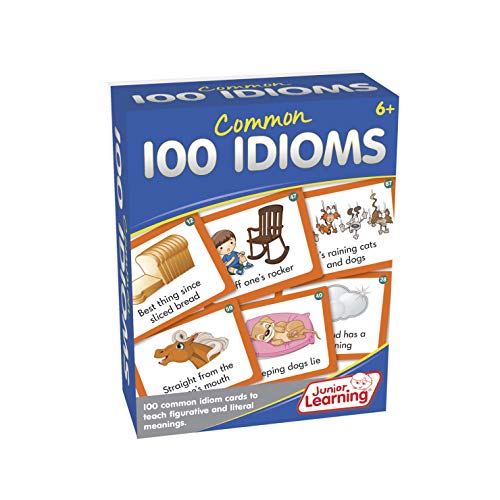 | Idiom Mastery | Target Age: 6‑9 years+ | Card Count: 100 cards | Material: Cardstock | VIEW LATEST PRICE | Read Our Analysis |
| AGO QnA ESL Card Game – 3 Level Box Set |  | ESL Conversation Pro | Target Age: 6 years+ | Card Count: 162 cards | Material: 300 gsm linen‑finish cardstock | VIEW LATEST PRICE | Read Our Analysis |
| Spanish-English Bilingual Alphabet Matching Game (72 Pairs) |  | Dual-Language Match | Target Age: 5‑12 years | Card Count: 72 cards (36 pairs) | Material: Cardboard, cardstock, plastic | VIEW LATEST PRICE | Read Our Analysis |
More Details on Our Top Picks
Key Education Phonics Puzzle Game for Kids
If you’re teaching kids aged 5‑8 who need a fun, standards‑aligned way to master phonics, grammar, and sentence building, the Key Education Phonics Puzzle Game is the perfect fit. You’ll unpack an 86‑card set: 55 word cards, 27 photo cards, and 4 punctuation cards, all color‑coded by parts of speech. The interlocking design lets you build sentences, practice capital letters, and explore punctuation while meeting NCTE and NAEYC standards. You can tailor activities to any level, using the included game ideas, sample sentences, and teaching suggestions. Made from sturdy cardstock, it’s ideal for homeschool or classroom use, earning a 4.7‑star rating from over 8,000 reviewers.
- Target Age:5‑8 years
- Card Count:86 cards
- Material:Cardstock
- Educational Focus:Grammar & sentence building
- Play Mode:Interlocking puzzle game
- Weight (approx.):Light (cardstock set)
- Additional Feature:Color‑coded parts of speech
- Additional Feature:Includes punctuation cards
- Additional Feature:Sample sentences provided
Learning Resources Snap It Up Phonics Card Game
Phonics Card Game turns practice into pure fun. You’ll challenge 2‑6 players to snap together three‑ and four‑letter words from the same word family, using 90 color‑coded cards that keep the pace fast. As you race to form words, you build confidence, sharpen phonemic awareness, and boost decoding skills. The game adapts to any skill level, making it perfect for classrooms, homeschooling, or family nights. Teachers trust it for small‑group work, and kids love the competitive, creative vibe. At just 0.28 lb, it’s lightweight, durable cardstock, and backed by a 30‑day return guarantee.
- Target Age:6‑10 years
- Card Count:90 cards
- Material:Cardstock
- Educational Focus:Phonics & decoding
- Play Mode:Fast‑paced card‑building game
- Weight (approx.):0.28 lb
- Additional Feature:Word‑family building challenge
- Additional Feature:Fast‑paced gameplay
- Additional Feature:2‑6 player support
Key Education 160 Early Learning Toddler Flash Cards
Parents of toddlers three years and older will find the Key Education 160 Early Learning Flash Cards the perfect tool for building vocabulary, because each of the 160 full‑color picture cards pairs a clear image with a guided‑reading prompt on the reverse side. You’ll see food, colors, animals, transportation, emotions, actions and school activities illustrated in vivid photographs. The reverse shows the word and a reading question, encouraging you to model pronunciation and comprehension. Designed by former special‑education teachers, the set supports sight‑word recognition, phonics and social‑emotional growth. A resource guide adds games and a word list, making practice interactive. With a 4.7‑star rating and a 30‑day return guarantee, it’s a reliable, portable learning companion.
- Target Age:3 years+
- Card Count:160 cards
- Material:Cardstock
- Educational Focus:Vocabulary & language development
- Play Mode:Flash‑card review & games
- Weight (approx.):2.98 lb (1.35 kg)
- Additional Feature:Full‑color picture cards
- Additional Feature:Guided‑reading questions
- Additional Feature:Resource guide included
BOHS Spanish Literacy Wiz Spelling Game – 60 Flash Cards
Preschoolers and early elementary learners who need a fun, hands‑on way to master Spanish lower‑case letters will love the BOHS Spanish Literacy Wiz Spelling Game. You’ll find 60 double‑sided cards that showcase 120 words, each paired with a visual cue that reinforces letter recognition. The tray holds 61 letter tiles, letting you move from easy to hard spelling while sharpening fine‑motor skills and hand‑eye coordination. Kids practice cognitive and language skills, extending attention span and memory. Designed for ages 3 to 10 years, the lightweight set (14 oz) fits any classroom or home. You’ll see confidence grow as they master lower‑case versus upper‑case distinctions.
- Target Age:3 years‑100 years
- Card Count:60 cards (plus 61 tiles)
- Material:Cardstock & plastic tiles
- Educational Focus:Spelling & letter recognition (Spanish)
- Play Mode:Spelling tile‑card game
- Weight (approx.):0.88 lb (14 oz)
- Additional Feature:Double‑sided word cards
- Additional Feature:Includes tray and tiles
- Additional Feature:Lower‑case vs. upper‑case focus
Junior Learning 100 Common Idioms JL473
If you’re looking for a fun, visual way to teach kids ages 6‑9+ everyday expressions, these 100‑card idiom set hits the mark. Each double‑sided card shows a vivid illustration beside the idiom, then flips to a sentence example that clarifies usage. The compact 4.61 × 3.5 × 1.93‑inch cards fit neatly in a backpack, and at 0.39 kg they’re easy to handle during play. You can quiz, match, or create stories, turning abstract phrases into memorable scenes. Parents and teachers love the 4.4‑star rating, and the 30‑day Amazon return guarantee adds peace of mind.
- Target Age:6‑9 years+
- Card Count:100 cards
- Material:Cardstock
- Educational Focus:Idioms & figurative language
- Play Mode:Quiz/flash‑card game
- Weight (approx.):0.86 lb (0.39 kg)
- Additional Feature:Illustrative idiom artwork
- Additional Feature:Double‑sided quiz cards
- Additional Feature:Example sentences included
AGO QnA ESL Card Game – 3 Level Box Set
The AGO QnA ESL Card Game’s 3‑level box set is perfect for teachers and tutors who want to spark lively English conversations in a classroom or homeschool setting. You’ll get three graded decks—Beginner, Intermediate, Advanced—totaling 162 linen‑finish cards, each 300 gsm and sized like standard playing cards. Every deck holds 36 illustrated question cards and 18 action cards, letting you match by color or number in a fun Uno‑style format. The durable magnetic storage box keeps everything organized. Designed by educators and ELTon‑nominated, it supports learners aged six and up, with 20‑minute indoor sessions that boost English acquisition for families, clubs, and schools alike.
- Target Age:6 years+
- Card Count:162 cards
- Material:300 gsm linen‑finish cardstock
- Educational Focus:ESL conversation practice
- Play Mode:Uno‑style matching game
- Weight (approx.):Standard card deck weight (light)
- Additional Feature:Three graded difficulty decks
- Additional Feature:Uno‑style matching gameplay
- Additional Feature:Magnetic storage box
Spanish-English Bilingual Alphabet Matching Game (72 Pairs)
Looking for a fun, dual‑language tool that boosts both memory and vocabulary? The Spanish‑English Bilingual Alphabet Matching Game gives you 72 cards—36 Spanish and 36 English pairs—so you can flip, match, and repeat letters and numbers while learning animal and object names from around the world. You’ll set it up in minutes; the sturdy cardboard and plastic cards survive classroom spills and home play. Targeted at ages 5‑12, it sharpens recall, reinforces immersion, and supports cultural education. Your kids practice both languages simultaneously, and the 30‑day Amazon return policy plus manufacturer warranty keep you risk‑free.
- Target Age:5‑12 years
- Card Count:72 cards (36 pairs)
- Material:Cardboard, cardstock, plastic
- Educational Focus:Bilingual alphabet & number matching
- Play Mode:Memory matching game
- Weight (approx.):Light (cardboard set)
- Additional Feature:2‑in‑1 language sets
- Additional Feature:Animal and object images
- Additional Feature:Memory‑matching format
Factors to Consider When Choosing Language Learning Game Cards
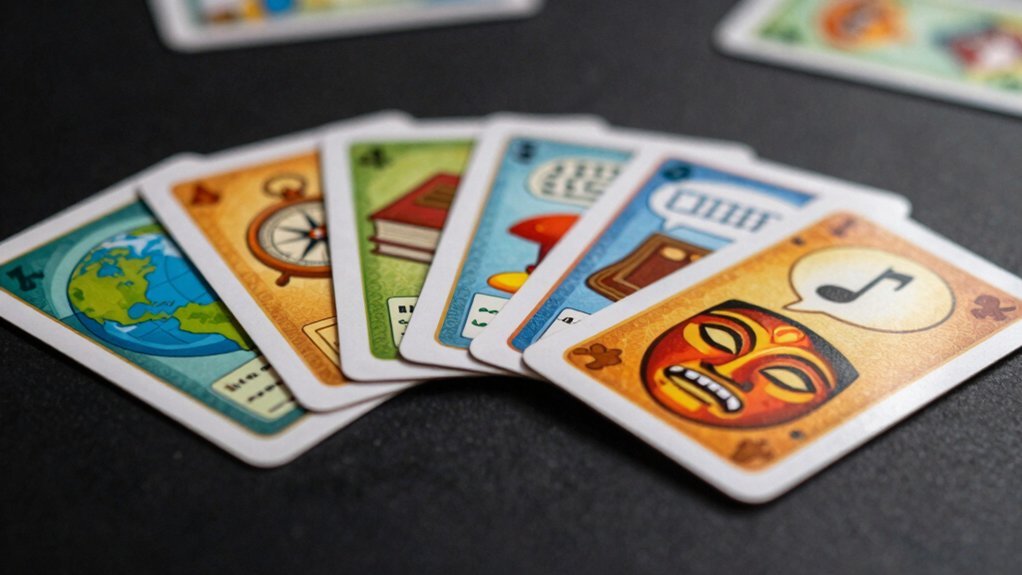
When picking language learning game cards, you should first check that the age range matches the learner’s developmental stage. Make sure the cards suit the player’s language skill level and that the visuals are clear enough for quick comprehension. Finally, consider the durability of the material and how the gameplay mechanics keep the experience interactive.
Age Age Appropriateness
Choosing age‑appropriate language learning game cards means aligning the cards’ difficulty, themes, and visuals with the learner’s developmental stage. You’ll want to check the reading level first; kids under eight need large fonts, simple words, and bright illustrations that hold short attention spans. For pre‑teens, introduce modest grammar challenges and richer storylines, but keep play sessions under fifteen minutes to avoid fatigue. Teens and adult beginners can handle denser text, nuanced cultural references, and longer conversational prompts. Assess prior knowledge: a child who already knows basic greetings can jump to themed vocab sets, while a newcomer needs foundational picture‑word pairs. By matching difficulty, theme, and visual style to age, you keep motivation high and learning effective.
Language Skill Level
Because language skill levels vary widely, you should match the cards’ complexity to the learner’s current proficiency. For beginners, pick decks that focus on basic vocabulary, simple sentence structures, and visual cues that reinforce meaning. Intermediate players benefit from cards that introduce idioms, verb conjugations, and contextual dialogues, encouraging them to think beyond rote memorization. Advanced learners need challenging prompts that require nuanced grammar, cultural references, and strategic wordplay. Assess the learner’s CEFR level or equivalent benchmark before buying, and confirm that the card set scales gradually, offering incremental difficulty without overwhelming the user. Look for clear progression markers on each card, so you can monitor improvement and adjust the difficulty as confidence grows. This guarantees the game stays engaging and educational at every stage.
Visual Design Clarity
A well‑designed card instantly captures attention, so clear, vibrant graphics and high‑quality illustrations are essential for keeping learners engaged. You’ll want colors that pop without overwhelming, and fonts that are legible at a glance. Choose age‑appropriate palettes and typefaces that match the learning goals, then keep the layout consistent: separate vocabulary, definitions, and examples with clean headings or subtle dividers. Add visual aids—pictures, symbols, or pictograms—right next to the text to reinforce meaning and boost recall. Pay attention to spacing; generous margins and balanced element sizing prevent clutter and make each card easy to read. When you align these design choices, the cards become intuitive tools that guide learners smoothly through new language concepts.
Card Durability Material
After you’ve nailed the visual layout, the next step is picking a material that can withstand repeated handling. Cardstock or thin paperboard keeps costs low, but it bends and frays faster than thicker options. If you expect frequent sessions, plastic cards win on durability, resisting bends, spills, and wear. Laminated or coated cardstock adds moisture resistance and protects against stains, extending life without the full price of plastic. For a premium feel, consider linen‑finished stock or high‑grade plastic; they feel solid in the hand and boost perceived value. Balance your choice with budget, intended use, and how often players will shuffle or flip cards. The right material guarantees the game stays functional and enjoyable over many learning cycles.
Interactive Gameplay Mechanics
Choosing the right interactive gameplay mechanics is key to keeping learners engaged and motivated. You’ll want cards that support matching, sequencing, or racing challenges, because those actions pull students into active language use. Look for versatile formats that work solo, in small groups, or across an entire class, giving you flexibility for any setting. Immediate feedback and scoring keep attention sharp and reinforce correct usage, while adjustable difficulty levels let the game grow with the learner’s proficiency. Incorporate collaborative play options so peers can converse, negotiate, and correct each other, fostering authentic communication. By blending these mechanics, you create a dynamic, adaptable tool that sustains interest and accelerates language acquisition.
Curriculum Alignment Standards
While matching, sequencing, and racing mechanics keep students engaged, the real value of language learning game cards lies in how they map onto curriculum standards. You should verify that each deck aligns with national language‑arts frameworks such as NCTE and NAEYC, ensuring relevance across grades. Look for cards that target vocabulary, grammar, reading, and writing, because those skills satisfy core objectives. The activities must reinforce specific curriculum goals, offering hands‑on practice that translates directly into classroom outcomes. Choose sets that differentiate by learning style and ability level, providing grade‑appropriate challenges for every learner. Finally, confirm that the package includes lesson plans, teaching guides, and assessment tools so you can integrate the cards seamlessly and measure progress efficiently.
Multi‑Language Support
If you want your students to experience true linguistic diversity, look for card games that support multiple languages and scripts. Choose games that expose children to varied linguistic backgrounds, fostering cross‑cultural understanding. Opt for bilingual or multilingual decks that reinforce vocabulary and grammar in both target languages at once, boosting overall proficiency. Guarantee the cards handle different scripts—Latin, Cyrillic, Arabic, or others—so learners become comfortable with diverse writing systems. Look for easy language‑switching or dual‑language options, letting you tailor the experience to each learner’s needs. Such multi‑language support creates an inclusive classroom, catering to diverse student populations and celebrating language diversity while keeping engagement high.
Storage & Portability Features
Often the most practical factor is how easily the cards move with you. You’ll want a compact, lightweight deck that slides into a backpack or briefcase without weighing you down. Durable cards paired with a sturdy case keep them safe from bends, spills, and frequent handling, whether you’re teaching in a classroom or studying on a commute. Look for thoughtful packaging—magnetic closures or solid boxes that snap shut and keep everything organized. Designs that strip away bulky components free up space, making it simple to stash the set alongside other supplies. A built‑in handle or a flexible storage pouch adds another layer of convenience, letting you grab the cards and go without fumbling for loose pieces. This blend of durability and smart packaging guarantees your learning tools stay protected and portable, ready for any language‑learning adventure.