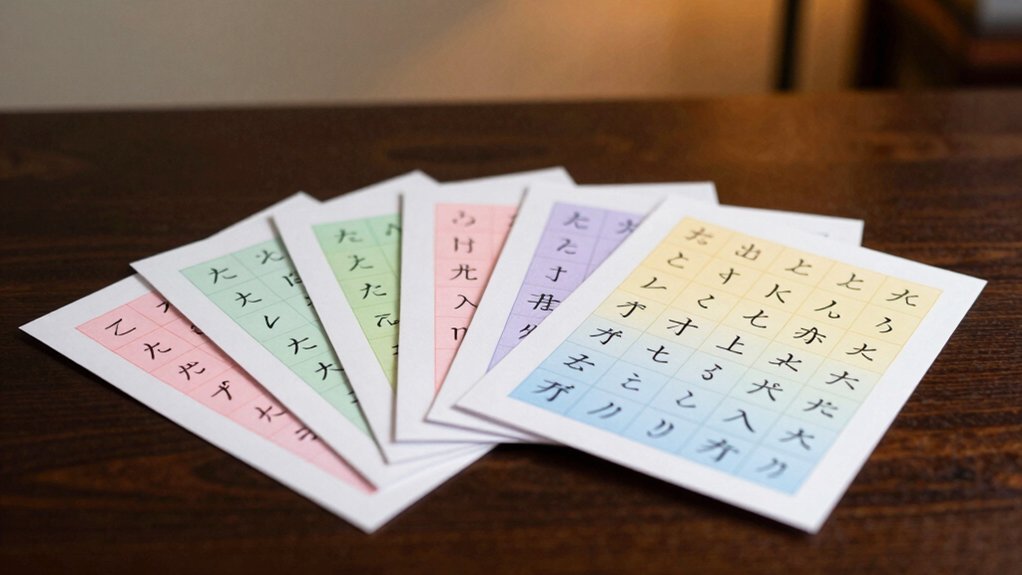
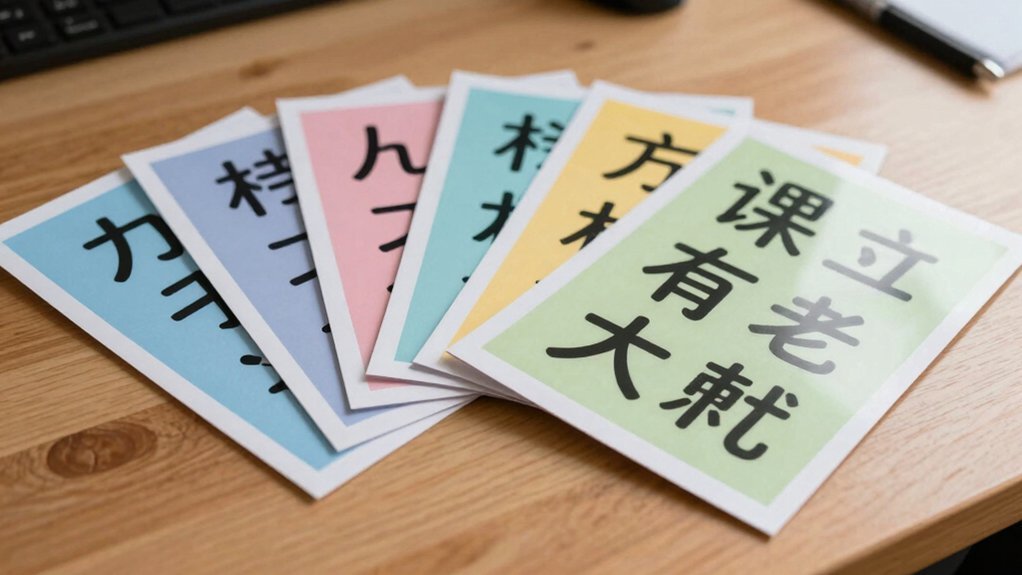
You might think a stack of paper is just a cheap study aid, yet the right conversation cards can turn a solo drill into a lively, immersive session. By pairing bilingual prompts with audio cues and visual hints, they spark active recall and keep you engaged wherever you go. The designs range from beginner-friendly UNO‑style matches to advanced storytelling twists, fitting classrooms, homeschooling, or casual meet‑ups. Curious how each set tackles proficiency, portability, and fun?
| TableTopics Spanish/English Question Card Game (135 Cards) |  | Bilingual Boost | Card Count: 135 cards | Language Focus: Spanish/English | Target Age Range: Pre‑teen to adult | VIEW LATEST PRICE | Read Our Analysis |
| AGO German Card Game for Beginners – Fun Practice | 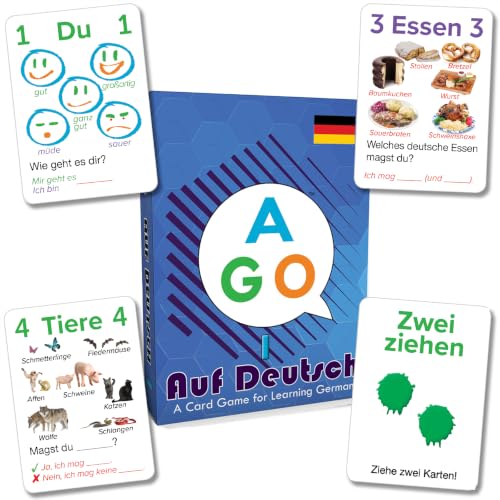 | German Starter | Card Count: 54 cards | Language Focus: German | Target Age Range: 6+ years (7‑80 years) | VIEW LATEST PRICE | Read Our Analysis |
| AGO QnA ESL Card Game – 3 Level Box Set |  | ESL Triple‑Deck | Card Count: 162 cards | Language Focus: English (ESL) | Target Age Range: 6+ years | VIEW LATEST PRICE | Read Our Analysis |
| Briston Japanese Conversational Flash Cards – 75 Sayings |  | Japanese Essentials | Card Count: 75 cards | Language Focus: Japanese | Target Age Range: Kids, teens, adults | VIEW LATEST PRICE | Read Our Analysis |
| Arabic Flash Cards with Audio – 75 Learning Cards |  | Arabic Audio | Card Count: 75 cards | Language Focus: Arabic | Target Age Range: All learners (no specific age) | VIEW LATEST PRICE | Read Our Analysis |
| Conversation Cards: Look Think Talk for Kids | 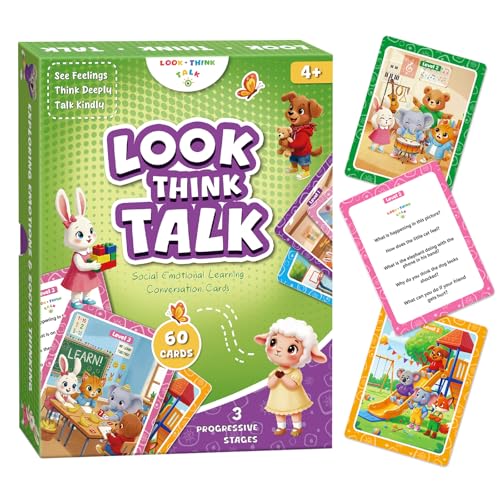 | SEL Kids | Card Count: 60 cards | Language Focus: English (general) | Target Age Range: Kids (school‑age) | VIEW LATEST PRICE | Read Our Analysis |
| Spanish Flashcards: 52 Essential Vocabulary Translations | 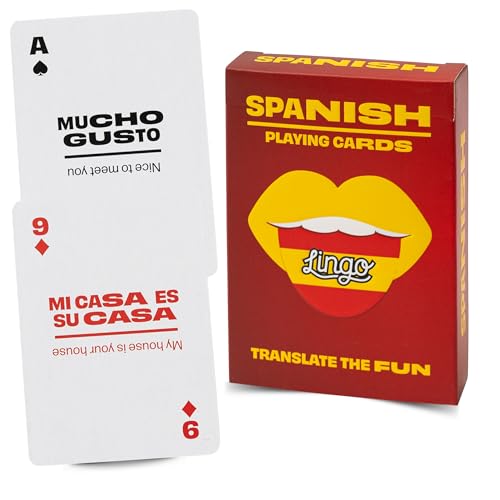 | Spanish Flash Essentials | Card Count: 54 cards | Language Focus: Spanish | Target Age Range: Adult | VIEW LATEST PRICE | Read Our Analysis |
More Details on Our Top Picks
TableTopics Spanish/English Question Card Game (135 Cards)
If you’re looking for a fun, low‑effort way to boost bilingual fluency, the TableTopics Spanish/English Question Card Game is the perfect pick. You’ll pull a card, read the prompt in English, then switch to Spanish, or vice‑versa, letting the conversation flow naturally. The 135 cardstock cards double as icebreakers for dinner parties, family gatherings, or solo study sessions. Their thought‑provoking questions spark meaningful dialogue, while the bilingual format reinforces vocabulary and grammar. Compact (4×4×4 in) and lightweight (1.39 lb), the set fits any space and serves bilingual families, teens, and adults alike.
- Card Count:135 cards
- Language Focus:Spanish/English
- Target Age Range:Pre‑teen to adult
- Physical Size (Card Dimensions):4 × 4 × 4 in (box) – cards typical playing‑card size
- Material Finish:Cardstock, plastic
- Audio/Pronunciation Support:None indicated
- Additional Feature:Bilingual card layout
- Additional Feature:Icebreaker party use
- Additional Feature:Compact 4‑inch cube
AGO German Card Game for Beginners – Fun Practice
The AGO German Card Game for Beginners is perfect for kids and adults who want to practice speaking German while having fun, because its 36 illustrated question cards and 18 action cards turn learning into an interactive game. You’ll draw a question card, see a picture, and answer using the labeled vocabulary, then an action card forces you to swap roles or add a twist. The 300 gsm linen‑finished cards feel sturdy, and the 2.5 × 3.5 in size fits comfortably in any hand. With an instruction booklet, you start playing right away, and the 30‑day return guarantee gives you confidence. It’s a compact, engaging tool for learners aged six through eighty.
- Card Count:54 cards
- Language Focus:German
- Target Age Range:6+ years (7‑80 years)
- Physical Size (Card Dimensions):2.5 × 3.5 in (63 × 88 mm)
- Material Finish:300 gsm linen‑finish cardboard
- Audio/Pronunciation Support:None indicated
- Additional Feature:Illustrated vocab cards
- Additional Feature:Action‑card gameplay
- Additional Feature:300 gsm linen finish
AGO QnA ESL Card Game – 3 Level Box Set
Looking for a fun, structured way to boost English conversation skills? The AGO QnA ESL Card Game delivers exactly that with three graded decks—Beginner, Intermediate, Advanced—totaling 162 cards. Each deck offers 36 illustrated question cards and 18 action cards, letting you match by color or number in an Uno‑style flow. The linen‑finish, 300 gsm cards feel sturdy, and the magnetic box keeps them tidy. Teachers, tutors, and families worldwide use them for ESL classes, homeschooling, and language clubs. At just 20 minutes per session, you’ll practice speaking, listening, and thinking in English while having a blast.
- Card Count:162 cards
- Language Focus:English (ESL)
- Target Age Range:6+ years
- Physical Size (Card Dimensions):Standard playing‑card size (≈2.5 × 3.5 in)
- Material Finish:300 gsm linen‑finish cards
- Audio/Pronunciation Support:None indicated
- Additional Feature:3 difficulty decks
- Additional Feature:Uno‑style matching
- Additional Feature:Magnetic storage box
Briston Japanese Conversational Flash Cards – 75 Sayings
Travelers and beginners alike will love the Briston Japanese Conversational Flash Cards because they pack 75 essential phrases, complete with hiragana, katakana, English translations, and QR‑linked native audio, into a compact, water‑resistant deck that fits easily in a pocket. You’ll flip a 3.5 × 2.5 inch laminated card, read the script, scan the QR code, and hear a native speaker instantly. The glossy 350 GSM cardstock survives rain and rough handling, so you can study on a train, in a café, or on a mountain trail. Designed by linguists, the set builds vocabulary, listening, and speaking skills while giving cultural context—perfect for kids, teens, adults, homeschool classrooms, or solo learners.
- Card Count:75 cards
- Language Focus:Japanese
- Target Age Range:Kids, teens, adults
- Physical Size (Card Dimensions):3.5 × 2.5 in
- Material Finish:350 gsm glossy laminated cardstock
- Audio/Pronunciation Support:QR codes linking to native audio
- Additional Feature:QR‑code audio links
- Additional Feature:Water‑resistant laminate
- Additional Feature:Curved‑edge design
Arabic Flash Cards with Audio – 75 Learning Cards
If you’re a beginner keen to speak Arabic confidently, these 75 flash cards with audio are the perfect companion. Each card shows Arabic script, English translation, and phonetic pronunciation, letting you read, hear, and repeat daily phrases instantly. Scan the QR code to hear native speakers, sharpening your accent on the go. The 3.5 × 2.5‑inch cards are lightweight, water‑resistant, and have rounded edges, so they survive backpacks, classrooms, or travel bags. Whether you greet a host, ask for directions, or discuss hobbies, you’ll master essential vocabulary quickly. Ideal for travelers, teachers, parents, and multilingual learners alike.
- Card Count:75 cards
- Language Focus:Arabic
- Target Age Range:All learners (no specific age)
- Physical Size (Card Dimensions):3.5 × 2.5 in
- Material Finish:350 gsm glossy laminated cardstock
- Audio/Pronunciation Support:QR codes/links to native audio
- Additional Feature:QR‑code native audio
- Additional Feature:Glossy laminated cardstock
- Additional Feature:Rounded‑edge safety
Conversation Cards: Look Think Talk for Kids
These Conversation Cards are perfect for parents, teachers, and speech‑language pathologists who want a fun, structured way to boost kids’ emotional intelligence and communication skills. You’ll hand them a waterproof, tear‑resistant card featuring a friendly animal in a daily scene, then ask the 5W1H and think‑infer‑predict prompts. Kids observe details, reason about causes, and express feelings, building empathy and sentence‑building confidence. The three progressive levels let you scale difficulty, while the sturdy box stores the 60 large‑format cards for home, classroom, or therapy use. You’ll see stronger observation, logical reasoning, and independent thinking in every session.
- Card Count:60 cards
- Language Focus:English (general)
- Target Age Range:Kids (school‑age)
- Physical Size (Card Dimensions):6.1 × 4.53 in (large format)
- Material Finish:Waterproof, tear‑resistant cardstock
- Audio/Pronunciation Support:None indicated
- Additional Feature:SEL & speech‑therapy focus
- Additional Feature:5W1H structured prompts
- Additional Feature:Waterproof, tear‑resistant
Spanish Flashcards: 52 Essential Vocabulary Translations
Looking for a fun, portable way to boost your Spanish vocabulary? Grab the Lingo Educational Spanish Flashcards, a 54‑card deck that blends playing cards with phonetic pronunciations. You’ll flip through 52 essential phrases plus two jokers, practicing on the go or during game night. The premium‑grade cards survive travel, and the bright box keeps them organized. You can shuffle, match, or play classic games while memorizing words, making learning lively and effective. Rated 4.6 stars from 99 reviewers, the set promises a solid language‑skill boost, and the 30‑day return policy backs your purchase.
- Card Count:54 cards
- Language Focus:Spanish
- Target Age Range:Adult
- Physical Size (Card Dimensions):Standard playing‑card size (≈2.5 × 3.5 in)
- Material Finish:Premium durable cardstock
- Audio/Pronunciation Support:Phonetic pronunciations printed on cards
- Additional Feature:Dual‑use as game deck
- Additional Feature:Includes jokers
- Additional Feature:Travel‑friendly bright box
Factors to Consider When Choosing Language Learning Conversation Cards
When you pick conversation cards, make sure they match your language level so you stay challenged but not overwhelmed. Choose a set that offers bilingual text and includes visual or audio cues to reinforce meaning. Finally, check the cards’ size, durability, and any interactive game features that keep practice engaging.
Language Level Appropriateness
Choosing conversation cards that match your proficiency level is essential for effective practice. When you pick beginner cards, you’ll see simple vocabulary, common phrases, and basic sentence patterns that let you build confidence quickly. If you jump to advanced cards, you’ll encounter nuanced expressions and complex topics that can overwhelm you and stall progress. Assess your current skill set honestly; a slight stretch is fine, but too much difficulty erodes motivation. Look for multi‑level decks that grow with you, offering easy prompts now and tougher ones later. This adaptability keeps learning fresh and guarantees each session targets the right challenge. By aligning cards with your language level, you’ll reinforce what you know while steadily expanding your fluency.
Bilingual Presentation Style
After you’ve matched cards to your skill level, the next step is to decide how they’ll display the languages. Choose a bilingual presentation that shows the target language side‑by‑side with your native tongue, so you can instantly spot connections and reinforce vocabulary. Make sure the layout lets you cover one side and test yourself on the other; this active recall boosts fluency. Look for designs that clearly label the target language, guiding each practice session and preventing confusion. When the card juxtaposes grammatical structures and word order, you’ll deepen comprehension and notice patterns across languages. A clean, well‑marked bilingual format keeps you focused, speeds up learning, and supports seamless switching between languages during conversation drills.
Visual and Audio Aids
If you want the cards to stick in your mind, pair each phrase with a clear visual cue—pictures, icons, or simple diagrams turn abstract words into concrete images. Vibrant illustrations grab attention and help you recall concepts faster. Add phonetic spellings and QR‑coded audio links so you can hear native pronunciation on demand. When you scan a code, a short clip plays the phrase, letting you mimic rhythm and intonation. This multimodal approach reinforces memory by engaging sight and sound simultaneously. Choose designs that balance color with readability; cluttered graphics distract rather than aid. By integrating visual symbols and instant audio, you turn passive flashcards into active practice tools that keep you motivated and improve fluency.
Card Durability and Size
A handful of sturdy, water‑resistant cards can make the difference between a seamless study session and a frustrating one. You’ll want cards that survive frequent shuffling, spills, and travel. Choose thick cardstock—300‑350 GSM—to resist tearing and keep the surface crisp after repeated writing. Rounded edges protect your fingers and prevent accidental cuts, while a waterproof coating safeguards the text from moisture. Size matters, too. Larger cards, around 6 × 4 inches, give you room to see prompts clearly and write notes without crowding. If you travel often, opt for compact formats between 3.5 × 2.5 and 4 × 4 inches, which fit easily in a bag yet remain readable. Balancing durability with a comfortable size guarantees your conversation cards stay reliable wherever you practice.
Interactive Gameplay Mechanics
Sturdy, well‑sized cards set the stage, but the real boost comes from how you play with them. When you match colors or numbers, you’re forcing yourself to process vocabulary and grammar on the fly, turning passive review into active recall. Turn‑taking mechanics push you to ask questions and answer in real time, sharpening fluency and listening. Action cards that demand a physical or spoken task inject energy, making each round feel like a mini‑performance rather than a worksheet. Adjustable difficulty levels let you start simple and ramp up complexity, keeping you challenged without feeling overwhelmed. Flexible rules let you shift from structured drills to free‑form chats, so the cards adapt to your style and keep conversations natural. This dynamic interplay turns practice into play, accelerating language growth.
Cultural Relevance of Content
When you select conversation cards, you must certify the scenarios, idioms, and visuals reflect the cultural norms and everyday realities of the target language community. Start by researching local customs, holidays, and social etiquette; embed those details in prompts so learners discuss situations they’ll actually encounter. Choose idioms and slang that native speakers use daily, and pair them with clear explanations to avoid confusion. Localize content by translating into regional dialects or adjusting references—like swapping “football” for “soccer” where appropriate. Verify visuals showcase diverse ages, genders, and ethnicities, mirroring the community’s makeup. This inclusive representation builds empathy, deepens understanding, and keeps learners motivated to practice authentic, culturally resonant conversations.
Portability for Travel Use
Cultural authenticity sets the stage, but the next step is ensuring the cards travel as easily as your ideas. You’ll want a compact, lightweight deck that slides into a pocket or purse without weighing you down. Look for waterproof, tear‑resistant material so a spilled coffee or a rainy train won’t ruin your practice. A 3.5″ × 2.5″ format fits neatly in most bags, and an attached case or zip‑pouch keeps everything organized on the go. QR‑code audio links add pronunciation help without adding bulk, letting you listen on a phone or tablet. By choosing cards built for durability and easy storage, you turn every commute, flight, or café stop into a spontaneous language session.
Teacher and Family Compatibility
If you want your cards to work for both classroom and home, guarantee they match the age and skill level of every learner. Choose decks that offer tiered prompts—simple, relatable scenarios for younger children and richer, nuanced topics for older students—so teachers can scaffold lessons while families keep conversation natural. Include cultural references and diverse viewpoints to spark curiosity and broaden awareness for all ages. Design cards that support both open‑ended chats and structured activities, letting teachers follow a curriculum and families adapt to dinner‑table talks. Opt for durable, portable cards that survive frequent handling, so they can be shuffled into daily routines without fuss. This flexibility confirms seamless integration across school and home environments.