
Mastering the Spanish alphabet is a straightforward yet enriching endeavor that invites language enthusiasts to explore its unique characteristics. With letters like "ñ" and the significance of digraphs such as "ch," "ll," and "rr," learners can reveal new dimensions of pronunciation. Engaging activities, from alphabet games to vowel drills, offer a pathway to fluency. The journey promises clarity and confidence, enticing learners to uncover the full potential of Spanish communication.
key Takeaways
- Familiarize yourself with the unique "ñ" character and its pronunciation for accurate communication.
- Understand that "ch," "ll," and "rr" are digraphs, no longer separate alphabet entries.
- Practice vowel pronunciation consistently to ensure clear and natural Spanish speech.
- Use flashcards and spelling challenges to improve recall of letters and sounds.
- Engage in writing exercises to develop muscle memory and enhance letter recognition.
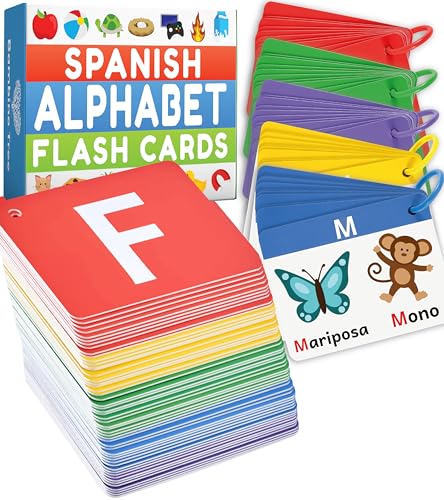
TARJETAS FLASH ALFABETO ESPAÑOL: Suitable for both spanish native learners and foreign language students. These flash cards teach the 27 letters of the spanish alphabet with over 100 spanish words to demostrate and practice the letter sounds.

36 double-sided cards give children a head start in language by teaching essential skills. / 36 tarjetas de doble cara que ofrece a los ni os una ventaja en lenguaje a trav de la ense anza de destrezas esenciales.

Understanding the Unique Features of the Spanish Alphabet
The Spanish alphabet captivates learners with its unique features, setting it apart from its English counterpart while maintaining a familiar structure. Comprising 27 characters, it introduces distinct letter distinctions that enrich its phonetic tapestry.
Unlike English, the Spanish alphabet includes the character "ñ," a symbol with origins rooted in medieval scribes' need for efficient writing. While "ch," "ll," and "rr" were previously distinct, they are now considered digraphs.
Additionally, the letter "y" has evolved in nomenclature, now called "ye" rather than "i griega." These character origins reflect the dynamic history and linguistic evolution of the Spanish language.
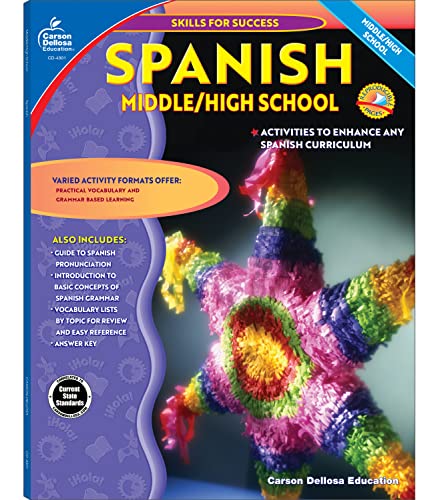
The activities in this book can be used on their own or in addition to any Spanish program, and the exercises focus on everyday Spanish vocabulary


The Role of the Ñ in Spanish Pronunciation
Distinctive and essential to Spanish pronunciation, the letter "ñ" holds a special position within the language's phonetic landscape. Known for its unique "ny" sound, the "ñ" exemplifies pronunciation nuances that distinguish Spanish from other Romance languages. Historically significant, this character evolved from the Latin "nn" abbreviation, becoming an unmistakable symbol of Spanish identity.
| Aspect | Description | Example |
|---|---|---|
| Phonetic Representation | Soft "ny" sound | niño |
| Historical Origin | Derived from Latin "nn" | año |
| Cultural Significance | Represents Spanish language | España |
| Usage | Common in everyday vocabulary | señora |
The "ñ" remains a fundamental component of Spanish articulation.


Changes to the Traditional Alphabet: Ch, Ll, and Rr
Recent changes to the traditional Spanish alphabet have streamlined its composition by officially removing the digraphs "ch", "ll", and "rr" as separate entries.
This adjustment reflects a modern approach to alphabet organization, aligning more closely with standard linguistic practices. The importance of "ch" and "ll," once considered distinct letters due to their unique sounds, remains intact within the language despite their new status as mere letter combinations.
Meanwhile, mastering "rr" pronunciation remains essential for clarity, as it is pronounced with a trilled sound. Pronunciation tips include practicing the tongue's rapid vibration, which can greatly enhance language proficiency.


Mastering Spanish Vowel Sounds for Clear Communication

Mastering Spanish vowel sounds is a crucial component for achieving clear communication in the language. Spanish vowels—A, E, I, O, U—are pronounced consistently, unlike their English counterparts, ensuring vowel harmony throughout words. This predictability is essential in minimizing accents and enhancing understanding.
Diphthong pronunciation, the blending of two vowel sounds within a single syllable, exemplifies this harmony. Spanish diphthongs, such as "ai" in "aire" or "ue" in "bueno," require precise articulation for effective communication.
Acquiring these skills is fundamental for learners aiming to speak Spanish clearly and naturally, fostering better interactions and more accurate exchanges.

Set of 4 Flash Card Packs / Paquetes de 4 sets de Tarjetas Did cticas

Color-coded SATPIN System: Designed with the SATPIN system, these flashcards introduce the Spanish alphabet in five progressive levels, starting with letters that have the most common and easiest sounds. The color-coded design helps children visually distinguish the groups, making letter-sound association and recognition a breeze.

Practical Exercises for Alphabet and Vowel Mastery
A variety of practical exercises can greatly enhance one's mastery of the Spanish alphabet and vowels, proving invaluable for language learners. Engaging in alphabet games and vowel drills offers a structured approach to reinforce learning.
Engaging in alphabet games and vowel drills enhances mastery of the Spanish alphabet.
These activities not only aid in memorization but also improve pronunciation and fluency. Learners can implement various strategies, such as:
- Matching games for letter recognition
- Vowel drills focusing on pronunciation
- Flashcards for quick recall
- Writing exercises for muscle memory
- Spelling challenges to enhance retention
Consistent practice with these methods guarantees that learners build a solid foundation in the Spanish alphabet and vowels.


Utilizing Audio Resources for Enhanced Learning
Building on practical exercises, audio resources play a pivotal role in enhancing the learning experience for mastering the Spanish alphabet and vowel sounds.
Through audio practice, learners can hone their pronunciation skills, which is essential for reducing accents and achieving fluency. Pronunciation tips embedded in these resources guide learners in distinguishing sounds unique to Spanish, such as the rolling 'r' and the 'ñ'.


Exploring Immersive Spanish Learning Opportunities

While many language learners rely on traditional methods, exploring immersive Spanish learning opportunities offers a unique and effective way to enhance language acquisition.
Language immersion allows learners to experience Spanish in real-world contexts, fostering improved comprehension and pronunciation. Engaging in cultural experiences deepens understanding and appreciation of the language's nuances.
Key immersive opportunities include:
- Live with a Spanish-speaking host family
- Participate in local cultural festivals
- Volunteer in Spanish-speaking communities
- Attend language-focused events or workshops
- Travel to Spanish-speaking countries
These experiences enrich vocabulary and cultural knowledge, providing a thorough approach to mastering Spanish beyond conventional classrooms.
Leveraging Learning Tools for Language Success
Immersive experiences provide a powerful boost to language learning, yet leveraging effective learning tools can further accelerate mastery of the Spanish language.
Language apps offer interactive platforms for honing pronunciation and comprehension skills. These apps often include vocabulary builders to expand one's lexicon efficiently.
By integrating features like flashcards, quizzes, and pronunciation guides, learners can reinforce their understanding of the Spanish alphabet and vocabulary.
Additionally, these tools provide the flexibility to practice anytime, ensuring consistent exposure and retention.
Embracing such resources can greatly enhance language acquisition, complementing immersive experiences with structured and personalized learning pathways.

